

Supreme Court Can’t Take up Copyright Case After Four Justices With Book Deals Recuse
On October 19, 2026, the Supreme Court said it could not consider a high-profile copyright case, BMG Rights Management v. Vetter, because four of its nine justices had recused themselves, leaving the lower court’s ruling in place by default.
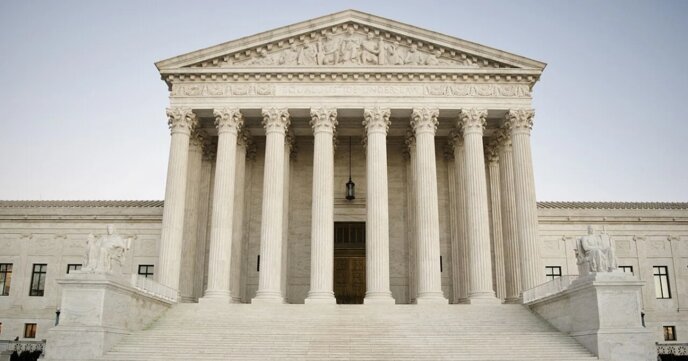
The Court needs six justices to act, and when too few can take part, federal law affirms the lower court’s ruling. That isn’t a decision on the merits. The lower court’s answer stands, not because the Supreme Court agreed with it, but because there weren’t enough justices left to review it.
The Court didn’t say why the four stepped aside, but reporters noticed they have something in common: all four have book deals with Penguin Random House, which shares a parent company with BMG.
A copyright question left without Supreme Court review
At its core, Vetter asked: when a songwriter takes back the rights to a song, as U.S. copyright law allows after several decades, does that extend to the whole world or only the United States? Cyril Vetter co-wrote “Double Shot (Of My Baby’s Love)” in 1962, and two lower courts, including the Fifth Circuit, ruled that he could reclaim it worldwide. BMG and other music publishers asked the Supreme Court to review it.
Instead, the Court said it lacked a quorum and did not have enough qualified justices to consider the case. As law professor James Grimmelmann pointed out, this wasn’t one justice stepping aside: the whole Court lost the ability to act.
A 2025 case involving the same company ended the same way
BMG is owned by Bertelsmann, a German media company that also owns Penguin Random House. In May 2025, the Court lacked a quorum in Baker v. Coates, a copyright case in which Bertelsmann was a defendant, after five justices recused themselves, including the same four justices who stepped aside in Vetter. After that case, Mike Masnick of Techdirt asked whether the justices’ book deals meant that no cases involving Penguin Random House could ever go to the Supreme Court. As he pointed out, that could have far-reaching consequences, since the publisher is frequently involved in consequential litigation.
Georgetown law professor Steve Vladeck agreed, arguing that Bertelsmann now effectively has an exemption from Supreme Court review in a wide range of cases where it’s a party.
Most conflicts show up only in financial disclosure reports
The book-deal connection was easy to catch, as it only takes a quick search to find out. Other conflicts are harder to spot: for example, a judge might own stock in a company that appears in court, or receive gifts from someone with a case before them. Those holdings and gifts show up in financial disclosure reports, which magistrate judges, other federal judges, and justices are required to file every year. Stock conflicts aren’t rare. In the Supreme Court’s last term, 27 of the justices’ 82 recusals involved stock ownership, according to Fix the Court’s tally. Disclosure records are what make that kind of count possible.
Reporters have done this kind of checking on a much larger scale. In 2021, The Wall Street Journal used data from Free Law Project to uncover that more than 100 federal judges failed to step aside from over 600 cases despite financial conflicts. The next year, Congress passed a bipartisan law requiring judges’ financial disclosures to be posted online. In 2024, ProPublica won the Pulitzer Prize for Public Service for its Supreme Court series, Friends of the Court, and it included a searchable database of the justices’ financial disclosures. ProPublica’s database also drew on Free Law Project’s financial disclosure database, which holds over 1.7 million investment records and more than 1,900 gifts reported by federal judges. We collect judges’ disclosure reports, turn scanned PDFs into searchable data, and make it free on CourtListener, including older reports that would otherwise have been destroyed. Those records are also why, in our 2021 testimony to Congress, we recommended barring federal judges and justices from owning individual stocks.
The BMG recusals show that book deals, not just stocks, can create conflicts. And when enough justices share the same conflict, the system breaks with no real recourse, because no one is left to decide the case.
Fix the Court proposed one approach: holding justices’ book earnings until retirement so they could still hear cases involving their publishers. However, that would still leave justices hearing cases in which they had a vested financial interest in one party. It’s worth asking whether justices should take private book deals at all, when there are other ways to share their ideas.
Public trust needs public records
Federal judges don’t win elections. They earn public trust by letting the public check their work: their reasoning, their records, and whether the people deciding a case have a stake in it. Recusal rules only work if someone can see the conflicts, and disclosure records make that possible.
Those records are free and searchable on CourtListener, and there’s more in them to find. Reporters and researchers, start with the financial disclosures. If you’d like to help keep these records open, support our work.
Public trust shouldn’t require taking anyone’s word for it.
