A Summer of Site Visits
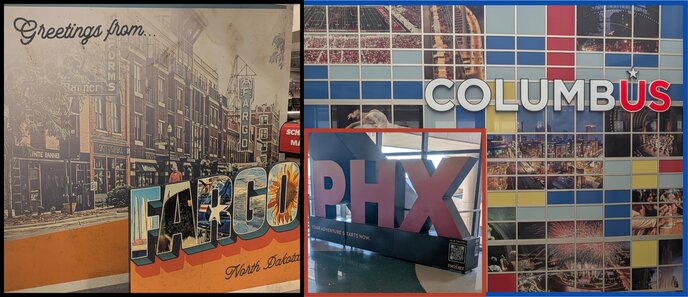
This summer, I visited courts in Columbus, Ohio; Phoenix, Scottsdale, and Glendale, Arizona; and Fargo, North Dakota. I sat in on dockets, stood near clerk windows, and spent hours around conference tables with the people who help self-represented litigants every day. Each visit changed how we are building the Litigant Portal.
Why We Go In Person
Our new Litigant Portal is a tool that courts deploy for people who come to court without a lawyer. It walks users through specific legal situations, which we call LegalFlows, and uses plain-language guidance to help prepare court forms. Users can take a step-by-step, button-based path, or choose to use an AI assistant built on the same court-provided content. Development is supported by the AWS Imagine Grant that Free Law Project received last year. This allows us to build with our founding court partners at no cost to them.
Much of our work with courts happens remotely. We draft decision trees, write user stories, and trade comments with subject matter experts over video calls and shared documents. That work matters, but it has limits. A decision tree can tell you what the rules require. It cannot tell you what it looks like when someone arrives at the courthouse with the wrong form, a phone at 10 percent battery, and a hearing in twenty minutes.
That is why in-person visits are so essential to every court partnership. Each visit this summer followed a similar shape:
- Observation. Watching self-represented litigants in the courtroom, at the clerk's window, and in self-help centers.
- Listening. Talking with judges, magistrates, referees, clerks, staff attorneys, and self-help staff about where people get stuck, both in general and within the specific LegalFlows we are building together in that jurisdiction.
- Working sessions. Walking through our decision trees with court experts, testing them against real scenarios, and reworking them on the spot.
- Deployment planning. Working through how the Litigant Portal will be hosted, where litigants will find it on the court's website, and how the court's name and branding will appear, so users know the tool comes from their court.
Columbus, Ohio: Franklin County Municipal Court
In early August, I spent two days with the Franklin County Municipal Court (Columbus, Ohio), one of the busiest municipal courts in the country. Together, we are building an eviction LegalFlow that serves both tenants and landlords.
The first morning began in the eviction courtroom. The court has done a lot to help people find their way: legal aid was set up just outside the courtroom, and court-provided navigators were nearby to direct people where they needed to go.
Even so, once tenants were inside the courtroom, I saw a lot of confused faces. People were unsure where to check in, where to stand, and what to expect when their case was called. Many did not know what options they had once they were there, what would happen next procedurally, or whether and when they could raise problems with the property, like a landlord not fixing a mold issue.
That afternoon, I sat in the court's Self Help Center and listened as its staff attorneys, compassionate and deeply knowledgeable people, walked self-represented litigants through their next steps on a wide range of legal problems.
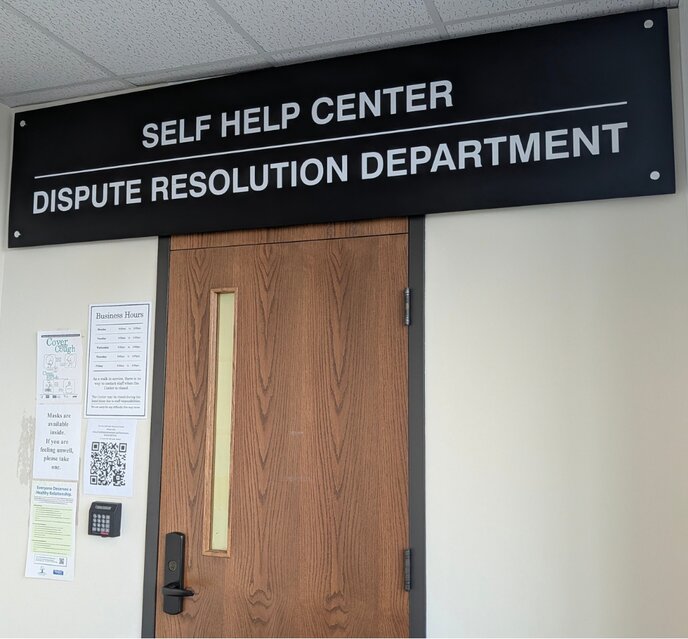
The second day started in the clerk's office. The questions people asked there were practical and urgent: which form do I need, when is my deadline, what happens if I miss it. Those questions map almost exactly to what a LegalFlow has to answer first.
From there, I met with several of the court's magistrates to talk through the Litigant Portal, what we hoped to learn from the visit, and the issues they see most often from self-represented litigants. Their perspective is different from anyone else's in the building. They see what happens when people arrive unprepared, and they have clear ideas about what litigants need to know before they ever reach the courtroom. I also met with the court's grants administrator to explore how philanthropic support could help sustain the Litigant Portal in Franklin County over the long term.
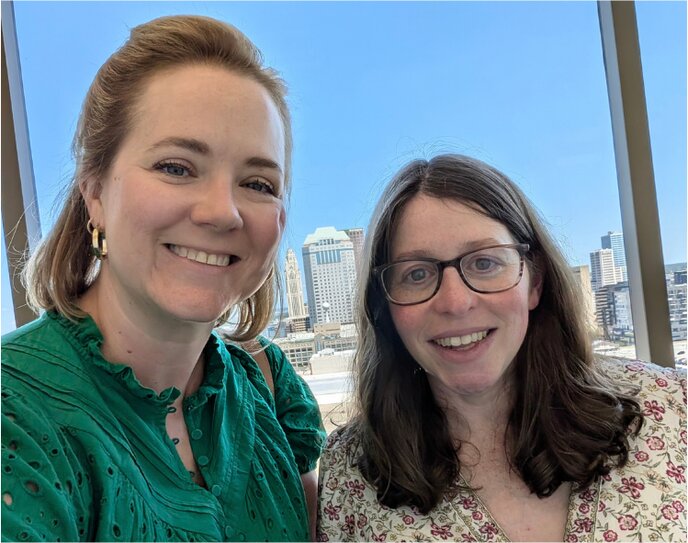
The visit closed with a working session with Managing Attorney Lisa Armour, walking through a paper draft of the eviction decision tree.
Arizona: The Administrative Office of the Courts, Scottsdale, and Glendale
Later in August, I traveled to Arizona to work on a Civil Traffic LegalFlow. For many people, a traffic ticket is their only experience with a court. Arizona handles roughly one million civil traffic citations each year, and each one comes with its own set of decisions: attend defensive driving school, pay the fine, or contest the citation.
On paper, those three choices look simple. In practice, each one comes with conditions that are easy to miss: who qualifies for defensive driving school, how deadlines are counted, and what happens to the other options once you choose one. A missed step can lead to added penalties or a hold on vehicle registration that surfaces months later.
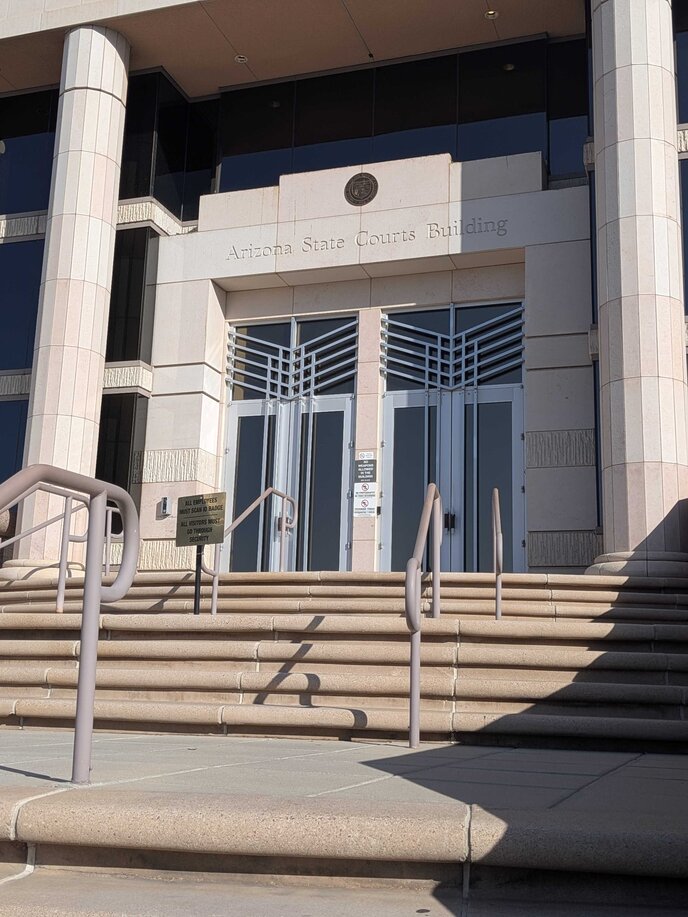
The first day was a working session at the Arizona Supreme Court's Administrative Office of the Courts in Phoenix, where more than ten experts gave up most of a workday to walk through the decision tree with me. We tested it against the details that determine each user's path, and the session surfaced changes we likely would not have caught through asynchronous draft reviews. We changed our language to match the terms Arizona courts actually use, "responsible" and "not responsible" rather than "guilty" and "not guilty," so what users read on the Litigant Portal matches what they will hear in court. We also mapped what happens when someone has lost their citation entirely, which turns out to be a common starting point.
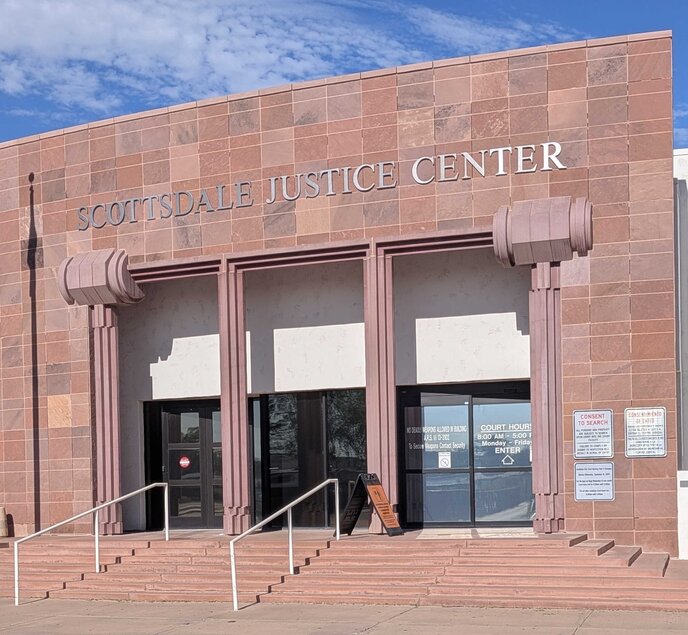
The second day, I was on site at the Scottsdale City Court and the Glendale City Court, where I spent most of my time with clerk staff. We talked through how they help self-represented litigants, the questions they hear most often, and just how complicated civil traffic questions can get. At one point, we pulled out the Arizona code to read exactly what the statute says about certain violations.
Both courts have already built resources of their own. Scottsdale shared a video it created to show people what a civil traffic hearing looks like. These hearings are fairly informal, usually just the officer, a magistrate, a bailiff, and the person who received the citation, with no prosecutor. That is simpler than a criminal case, but it can still be confusing if you do not know what to expect. Glendale's clerks shared an FAQ sheet their office developed to answer common civil traffic questions and to train new counter clerks.
In Glendale, I also spent time with the magistrate talking about how technology could help people prepare before their hearing, along with some of the limitations we will need to think through. At both courts, everyone was generous with their time. They let me ask a lot of questions, watch them work, and dig into how we could make their work, and the experience of people coming to court on their own, better.
Fargo, North Dakota: Cass County Courthouse
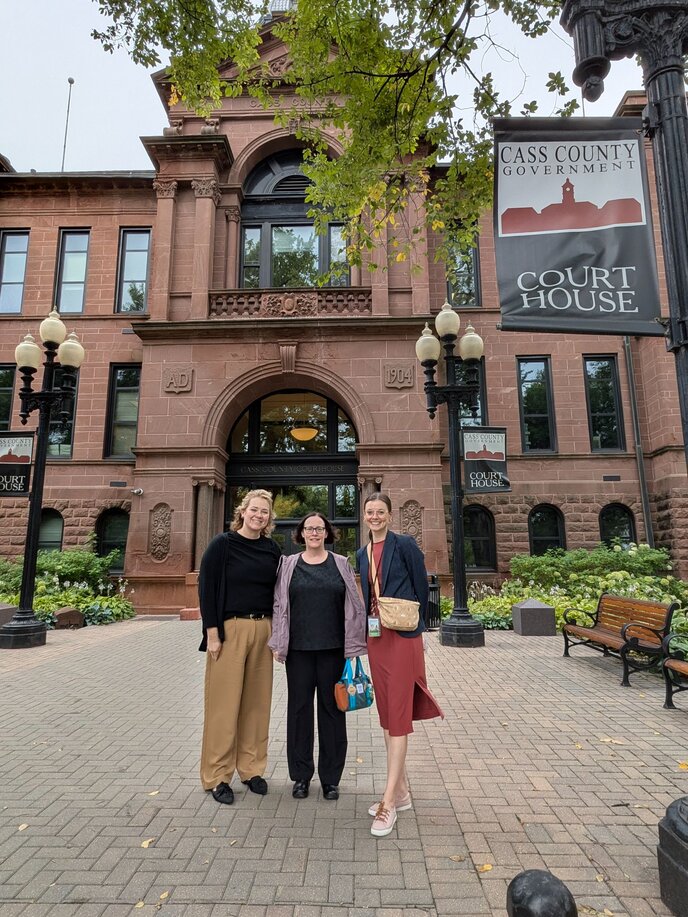
In September, I traveled to Fargo to work with the North Dakota Supreme Court's team at the Cass County Courthouse. Our work there centers on an Adult Name Change LegalFlow, which is our most advanced and is currently in testing.
Their team built an agenda that covered the whole courthouse. I was able to observe the clerk's counter and sit in on cases involving self-represented litigants. We also held two discussion sessions with judges, where I demoed the Litigant Portal, walked through the principles that guide how we use AI, and answered questions about why we are building it, how it will be sustained, and Free Law Project's free research platforms, CourtListener and RECAP. Later, I attended a Cass County Bar Association meeting, where I was introduced to about 100 local attorneys.
Our working sessions focused on the parts of a name change that most often trip people up. Publication is one example. Many people do not know that a name change may require publishing notice, or that North Dakota allows the requirement to be waived in certain circumstances. How the Litigant Portal explains that choice matters, especially for users with privacy concerns. We also worked through how confidential information is handled in the forms, and how the Litigant Portal should support someone who needs to leave, complete a step at the courthouse, and return later to finish.
What We Heard Across Three Courts
The courts, case types, and procedures were different, but I heard many of the same concerns.
- People arrive in the middle of their story. Few users start at the beginning. They arrive after a notice, a missed date, or a judgment. The Litigant Portal has to meet them where they are.
- Deadlines drive outcomes. In every court, the most serious consequences came from missed deadlines and missed appearances, often because the person did not know the deadline existed.
- Words matter. Legal terms that court staff use without thinking are often the first barrier for a self-represented litigant. Matching the court's own terminology, and explaining it, reduces confusion at the window and in the courtroom.
- Court staff already know the answers. Clerks, self-help staff, and staff attorneys answer the same questions many times a day. Much of our job is capturing that knowledge carefully and putting it in front of people before they reach the window.
Thank You to Our Project Leads
Every one of these visits depended on the people who organized them. Our court-based project leads did far more than find a date on the calendar. They served as tour guides through their courthouses, briefed their colleagues on the Litigant Portal project before I arrived, arranged courtroom observations, set up meetings with key people, and made sure I had everything I needed.
In Columbus, Lisa Armour, Managing Attorney at the Franklin County Municipal Court Self Help Center, opened doors across the court, from the eviction courtroom to the clerk's office to the magistrates' chambers.
In Arizona, Brittany Pelly, Consolidated Collections Unit Manager, Arizona Supreme Court, Administrative Office of the Courts, brought together a room of more than ten experts, who spent most of a workday with me. She then organized visits to two courts, briefed each team ahead of time, and made sure security and courtroom observations went smoothly.
In Fargo, Catie Palsgraaf, Law Library Director for the North Dakota Supreme Court, traveled three hours to spend two very full days with me. Vanessa Lystad, Staff Attorney for the East Central Judicial District, built an agenda that let me see as much as possible, from the clerk's counter to the bench to the local bar association. Together, they worked through a full audit of the Adult Name Change decision tree with me, and their insights made it stronger.
What Comes Next
Each visit produced a list of decisions, corrections, and open questions that we are now working through with our court partners. Those changes are flowing into the decision trees, the guided interviews, and the content that powers the Litigant Portal as we move toward pilot launch.
I am grateful to the judges, magistrates, referees, clerks, staff attorneys, and self-help staff who made time for me this summer, and to the court leaders who opened their doors. They gave us something no amount of remote work could: a clear view of what self-represented litigants face, and a detailed sense of how to help.
If you work with a court that should be part of this conversation, I would welcome an introduction at jessica@free.law.