Waves of Justice at UC Law SF: When Data Becomes Art
Most legal data lives where you expect it to live. In opinions. In briefs. In research platforms. It connects cases through citations and quietly builds the architecture of precedent.
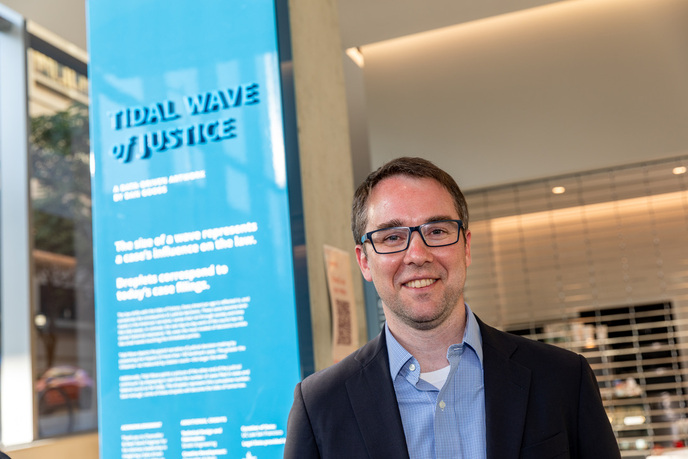
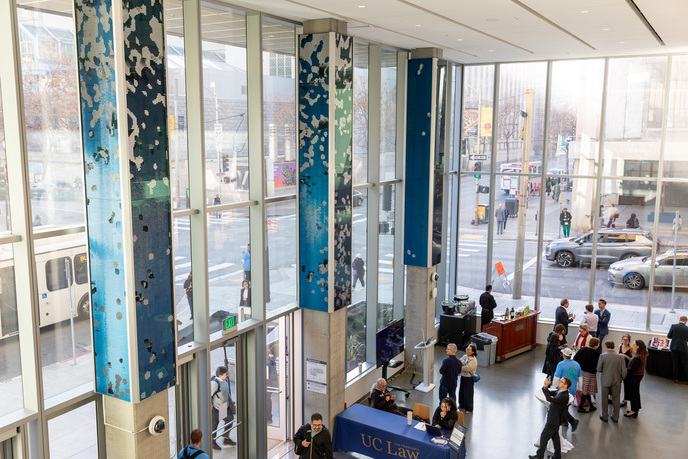
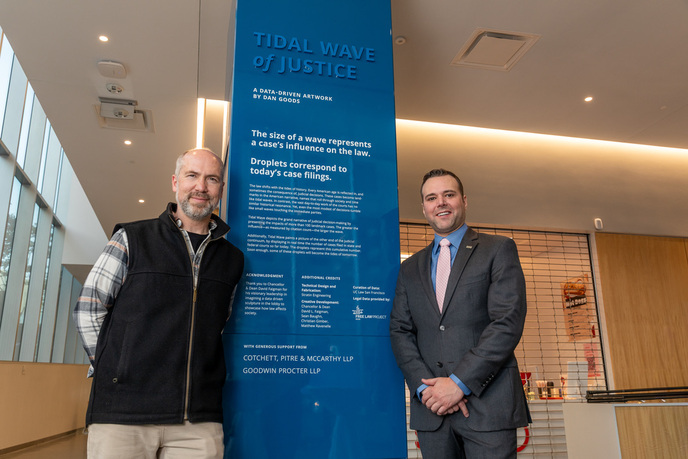
At UC Law San Francisco, some of that architecture now moves across a wall in waves of light. Earlier this month, the law school unveiled Tidal Wave of Justice, a large-scale installation that transforms legal citation data into a living visual experience. The piece draws on real-time data from CourtListener, Free Law Project's open legal research platform. Instead of tracing influence through headnotes or search filters, students and visitors can watch it ripple outward in motion.
From Data to Reflection
Citations are easy to skim past. They sit in footnotes or appear in parentheses. But each one signals something important: a court is relying on, distinguishing, or responding to what came before.
Over time, those signals accumulate.
A single case may shape dozens of others. Landmark decisions can influence doctrine for generations. What looks like a line of text in an opinion is often part of a much larger conversation unfolding across courts and across decades.
The installation makes that conversation visible. Waves build as citations increase. Patterns shift as new decisions enter the system. It is not static. It reflects the ongoing work of the judiciary and the way legal authority develops in real time.

Open Data in Action
For Free Law Project, this moment is meaningful because it shows what open legal data can become.
CourtListener exists to provide free access to primary legal materials. Anyone can read opinions, examine citation relationships, and understand how cases connect. Journalists use it to write accountability stories. Researchers analyze it to study trends in judicial behavior. Lawyers and advocates rely on it to understand how precedent evolves. Developers use it to build new tools with Free Law Project's APIs.
All of that depends on access.
When legal information is open, it can power scholarship and reporting. It can support innovation. It can strengthen transparency. And sometimes, it can inspire art.
Seeing the Reach of Law
There is something fitting about this installation living inside a law school. Students are learning how to read cases carefully and argue from precedent. At the same time, they are surrounded by a reminder that every decision is part of a larger ecosystem.
Stand in front of the waves long enough and the scale becomes harder to ignore.

Legal infrastructure often feels abstract. Databases and APIs sit behind the scenes. But the data inside them represents real disputes, real rights, and real consequences. The legal data itself records how power is exercised and how it is limited, and it reveals how legal ideas move through institutions over time.
The law has reach. It moves. It accumulates force.
We are proud that CourtListener's open data can help bring that reality into view. When legal information is accessible to everyone, it does more than support research. It invites engagement. It encourages reflection. It reminds us that the work of law extends far beyond the page.